Cookie Policy | Sitemap
Shri Chaitanya Sridhara Sangha

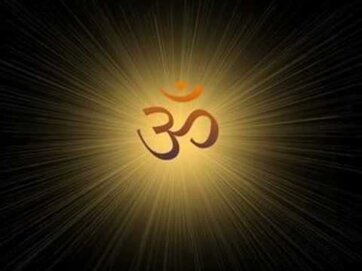
Veda
(Sacred Scriptures)
The term “Veda” means “to know” or “knowledge”, and derives from the Sanskrit root “vid”, to which the word "idea" (originally widea) in Greek, the word "video" in Latin (One who knows, sees the truth; hence: “video”) and the English words "wit" and "wisdom",
The Vedas, in a reduced sense of the term, are the four Samhitas (sacred books) written down in India five thousand years ago by Vyasadeva, an ascetic sage whose soul is eternally liberated, that is, endowed with a particular power, granted to him by God Himself, which enabled him to perform this great service.
It should be specified that these books have an oral tradition that dates back many centuries before the advent of Vyasadeva. In fact, the texts themselves explain that the knowledge contained in them was directly emanated by God.
The four Samhitas were revealed as a single long work that was orally transmitted by the great sages to their disciples. At the beginning of the Iron Age (Kaliyuga), when humans began to use their intellectual and mnemonic abilities less and the lifespan decreased, Vyasadeva (Vyasa means "to divide"), in order to make this vast knowledge simpler and more accessible, divided it into four parts: the Rig Veda (the Veda of sacred sounds), the Sama Veda (the Veda of melodies), the Yajur Veda (the Veda of rituals) and the Atharva Veda (the Veda of spells) and finally summarized all this knowledge in an immense work with concise language known as Vedanta Sutra.
In a broader sense, however, the term Veda can refer to any lasting knowledge.
Vedic literature comprises the largest and oldest known written tradition.
* The 108 Upanisads (elaborate philosophical explanations of the four Vedas, which were revealed to realized sages and are therefore called sruti, or "that which is heard").
* The smriti ("that which is remembered") which are subsequent to the Upanisads and include:
- the Itihasa - epic tales, among which the main ones are:
- the Mahabharata “Great story of the earth” (110,000 verses) which in turn includes the Bhagavad-gita (“The Song of the Blessed, Sri Krishna”)
- the Ramayana (more than 50,000 verses)
* The 18 Purana main (narrations of the deeds of God and His incarnations; stories and biographies of great saints and sages of the past) whose purpose is to make the Vedas even more accessible. Among these texts, the main one is the Srimad Bhagavatam)
* The minor Puranas and the regional ones and numerous other sacred scriptures.
The verses in each of the Vedic texts follow rigorous and harmonious rules of poetic art and meter.
These sacred scriptures are addressed to all humanity and provide specific instructions and advice for every socio-economic class and every state of consciousness. They cover every aspect of material activities (the arts, medicine (Ayurveda), agriculture, nutrition, military protocol, rules of etiquette and behavior in society for the well-being of all, rules for state administration, guidelines on how to build and decorate a temple or residence, and many other topics).
The Vedas guide man to mastery of every aspect of transcendental knowledge, through the techniques of different types of yoga, through simple prayers, complex rituals, philosophical treatises, and methods of spiritual realization.
All the knowledge contained therein, both material and spiritual, being emanated directly from God, is designed to elevate the state of consciousness of every being, at whatever level they may be, and to help them achieve the ultimate purpose of life, which is to awaken the dormant love for God, the Source of everything and the Cause of all causes. Ultimately, even the way to worship God, to serve Him, and to return to Him is indicated to us by Him Himself, directly or through His pure devotees.
It follows that transcendental knowledge is "descending," that is, revealed by mercy from the higher plane and cannot be understood by "ascending" methods, that is, empirical, inductive, or by our own means, based on the experience of imperfect senses subject to error and illusion.
Spiritual understanding depends on our attitude towards the Source of this knowledge, that is, God! The more we are willing to surrender to His sweet will and serve Him with faith and pure love, without envy and selfishness, the more He will guide us, sending His pure Representative who will show us the right path with the torch of divine love.
The Vaishnava tradition considers all supplementary Vedic literature indispensable for the study of the Vedas. For the Vaishnavas, scriptures that glorify Sri Krishna and describe his wonderful and ever-attractive eternal pastimes are of particular importance.
Among these, the Srimad Bhagavatam (Bhagavata Purana) is the highest. Compiled by Vyasadeva himself, this work describes in detail the process of Bhakti-Yoga (love for God) developed through the glorification of the name, fame, form, qualities, and eternal pastimes of the avatars of Vishnu, with particular emphasis on the lila (pastimes) of Sri Krishna, the Supreme Personality of Godhead, the most fascinating and attractive. It is also considered the natural commentary on the Vedanta Sutra and is regarded by the Vaishnavas as the essence of all the Vedas.
For its synthesis and clarity, the knowledge and application of the teachings contained in the Bhakti-Yoga as well as the Bhagavad-gita are also fundamental for the practice of
This work is a part of the vast poem of the Mahabharata and recounts the profound dialogue between Lord Krishna and his friend, the warrior Arjuna, on the battlefield, just before the fight begins. Arjuna represents every spiritual soul trapped in a material body who does not want to fight because he is prey to illusion and anxiety about the outcome.
The Lord Krishna, with His sweet and affectionate words, reveals to him that He is the Controller and the Witness of everything and the eternal duty (Sanatana-dharma) of every small individual soul is to serve the Supreme Lord, with love and devotion, and by doing so will be free from anxieties and fears and will be established in the pure consciousness of Krishna, freed from the conditionings and sufferings of matter.
Finally, we can add to the Vedic scriptures the many writings of Masters of the disciplic succession (Parampara), such as the Sri Caitanya-caritamrta by Krishna das Kaviraja Gosvami and the many books of the Six Gosvamis, the most authoritative disciples of Sri Caitanya Mahaprabhu.
TELEPHONE NUMBER:
0039 339 1776150
ADDRESS:
Vocabolo Madonna degli Angeli snc - 02046 Magliano Sabina (RI) - ITALY
E-MAIL:
info@scsridharasangha.org